Start with the problem. Build the product around it.
Tell us who has the problem and how they handle it today. We'll help you scope an MVP or a fuller product around those people.
- MVP scope agreed, then built in stages
- Customer accounts, teams and roles planned early
- Subscription billing where it applies
Everything behind the login screen.
The most useful thing a SaaS development company can do early is help you decide what the first release leaves out. We start there, then design and build what it does need: accounts, billing if you charge subscriptions, and the data and integrations the product depends on.
SaaS MVPs and clickable prototypes
A first version real users can sign up for, or a prototype to test the idea.
Multi-user business apps with roles and permissions
Accounts for whole teams, with roles that decide who can see and change what.
Subscription and membership platforms
Plans, payments and renewals handled by a supported billing provider.
Admin panels and customer dashboards
The screens you use to run the product, and the ones your customers see.
- Startup founders
- B2B product teams
- Service businesses
- Software businesses
This is for founders testing whether people will pay for a SaaS idea, teams building a subscription product, and businesses with an internal tool that other companies want to use too.
A small first release, then the next one.
Move features between the first release and later. The cube is built from what you keep, so the smaller it is, the sooner real users can try it.
3 features in the first release. A focused first release that real users can try sooner.
First release
Later
Software you can click through.
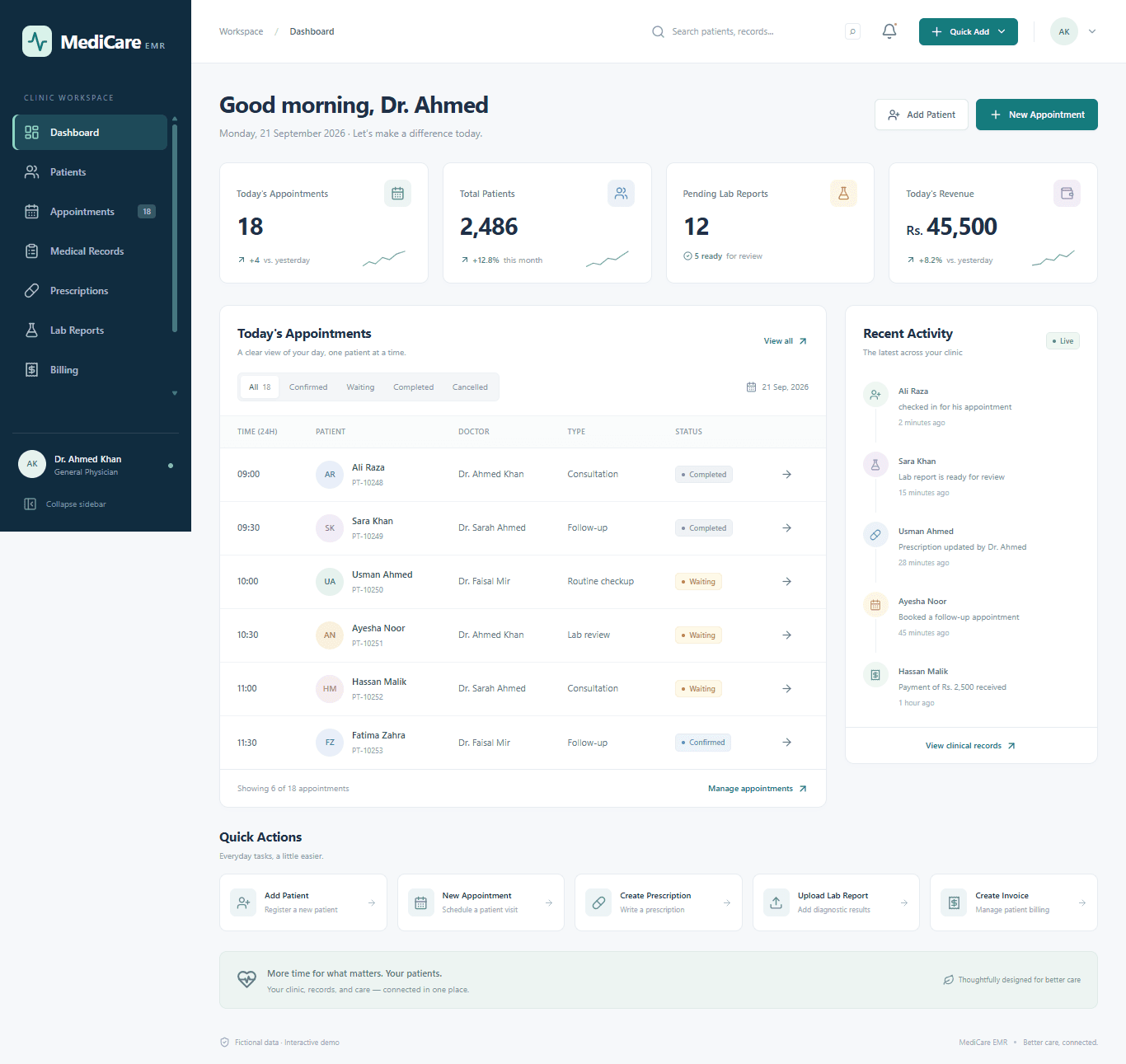
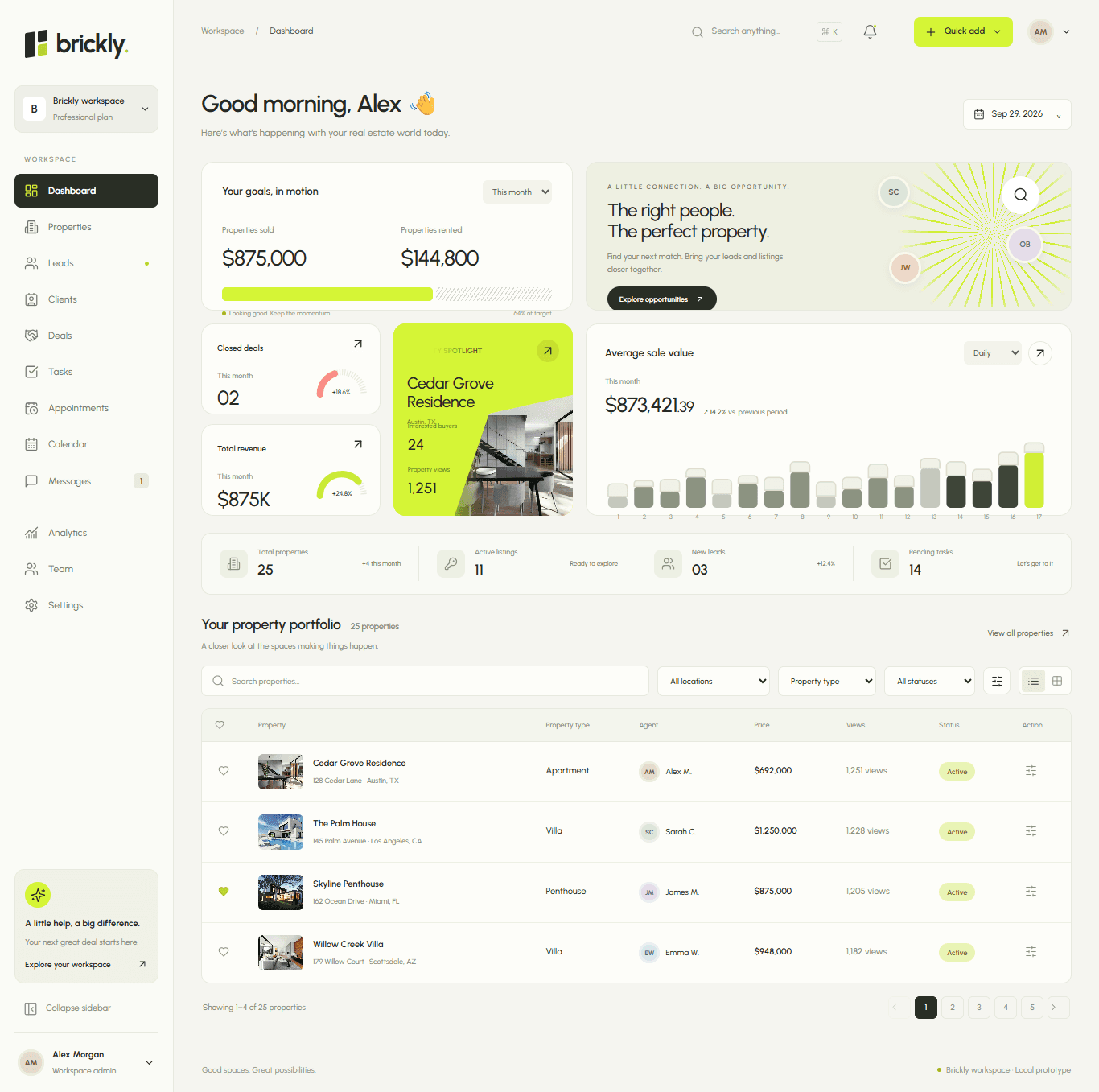
Brickly and MediCare EMR are our own demo prototypes, running on sample data. Accounts, roles and dashboards: the same building blocks a SaaS product needs.
Widely used tools, so other developers can take over later.
The stack covers what most SaaS products need: sign-up and login, team permissions, subscription billing, hosting and error tracking.
Product & front end
 Figma
 React
 Next.js
 TypeScript
 Tailwind CSS
 Storybook
Back end, data & operations
 Node.js
 PostgreSQL
 Prisma
 Redis
 Supabase
 Auth0
 Stripe
 Docker
 AWS
 Vercel
 Sentry
 GitHub
See it working early.
Four stages, from the first conversation to launch. You see the interface and working features as they’re built, not only at the end.
Choose the first scope
Pin down the problem and the smallest release that solves it for real users.
Plan the architecture
How accounts, teams and permissions work, where the data lives and which services it connects to.
Build in milestones
You see the interface and working features as they're built, not only at the end.
Test & iterate
We test the main paths through the product, then plan the next release around user feedback.
Questions about SaaS development.
If your question isn’t here, send it over. Most answers depend on the details of your project anyway.
- Can you help define an MVP?
- Yes. We separate the core workflow from the features that can wait, and plan a first release that real users can try and give feedback on. Scope and timeline are agreed before development starts.
- Can the product support subscriptions and multiple teams?
- Yes, those can be built in. Which billing provider to use, how each customer's data is kept separate, who can see what and what gets reported are all planned for your product specifically.
- Can we see software you have built?
- Yes. Brickly, a real estate management system, and MediCare EMR, a clinic management system, are interactive demo prototypes you can open and click through. You'll find both on our custom software page.

Tell us what
you're working on.
A few lines about your business and what you have in mind is enough. We'll read it properly and reply with questions and next steps.