A store that fits the way you sell.
Shoppers need to find the right product and pay without fuss. Your team needs orders, stock and delivery to run without workarounds.
- Product variants, categories and search
- Cart and checkout, built and tested
- Supported payment, shipping and stock connections
Retail, wholesale or both.
Our job as an ecommerce development company is to build the store you need, not the one a platform makes easiest, then connect it to the inventory, payment and shipping systems that keep orders moving.
Online stores for direct-to-consumer brands
Stores that sell straight to your customers, with your brand on every page.
B2B catalogs and trade ordering portals
Trade accounts, customer pricing and reordering without the phone calls.
WooCommerce and Shopify stores
Built on the platform that suits your catalog and how your team works.
Custom ecommerce development and integrations
Stores that don’t fit a template, connected to the systems you already run.
A good fit for retailers taking their shop online, brands that have outgrown their first store, and B2B suppliers whose trade customers still reorder by phone or email.
Operations first. Platform second.
We look at your catalog, payments, integrations and how your team works, then recommend one of these. The bigger the cube, the more we build from scratch.
01Hosted for you
Shopify
Best when you want a store your team can run without a developer, and your catalog fits the way Shopify works.
Shopify development02Inside WordPress
WooCommerce
Best when your content already lives in WordPress, or you want control over hosting and plugins.
WordPress development03Built around you
Custom build
Best when your pricing, products or checkout don’t fit a template, or the store has to work with your own systems.
Plan a custom store
Pick a look to start from.
Store concepts, here to give you a feel for what’s possible. Hover over one to scroll the whole store. Yours starts from your brand and your products.
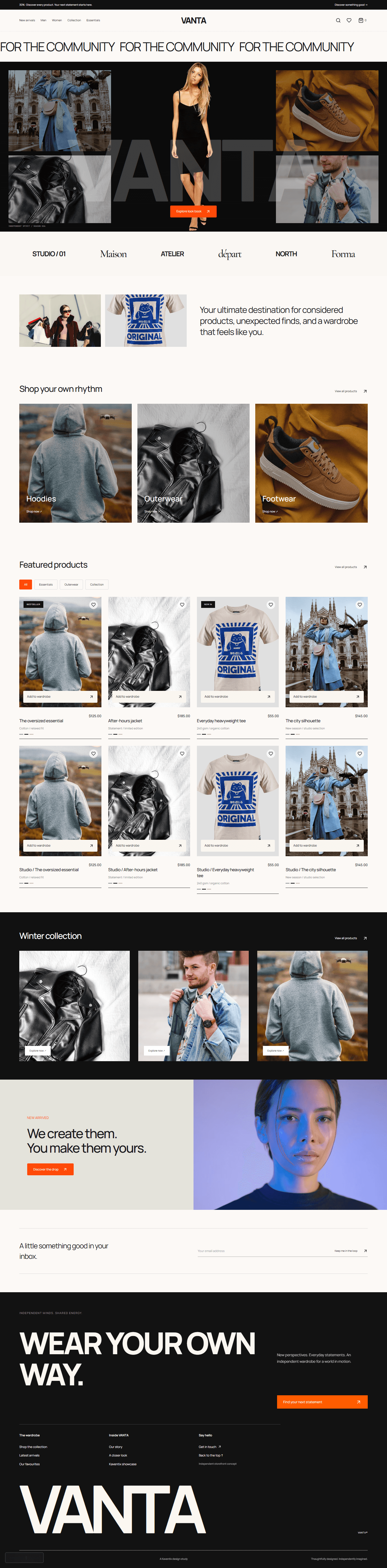
01Vanta / apparel 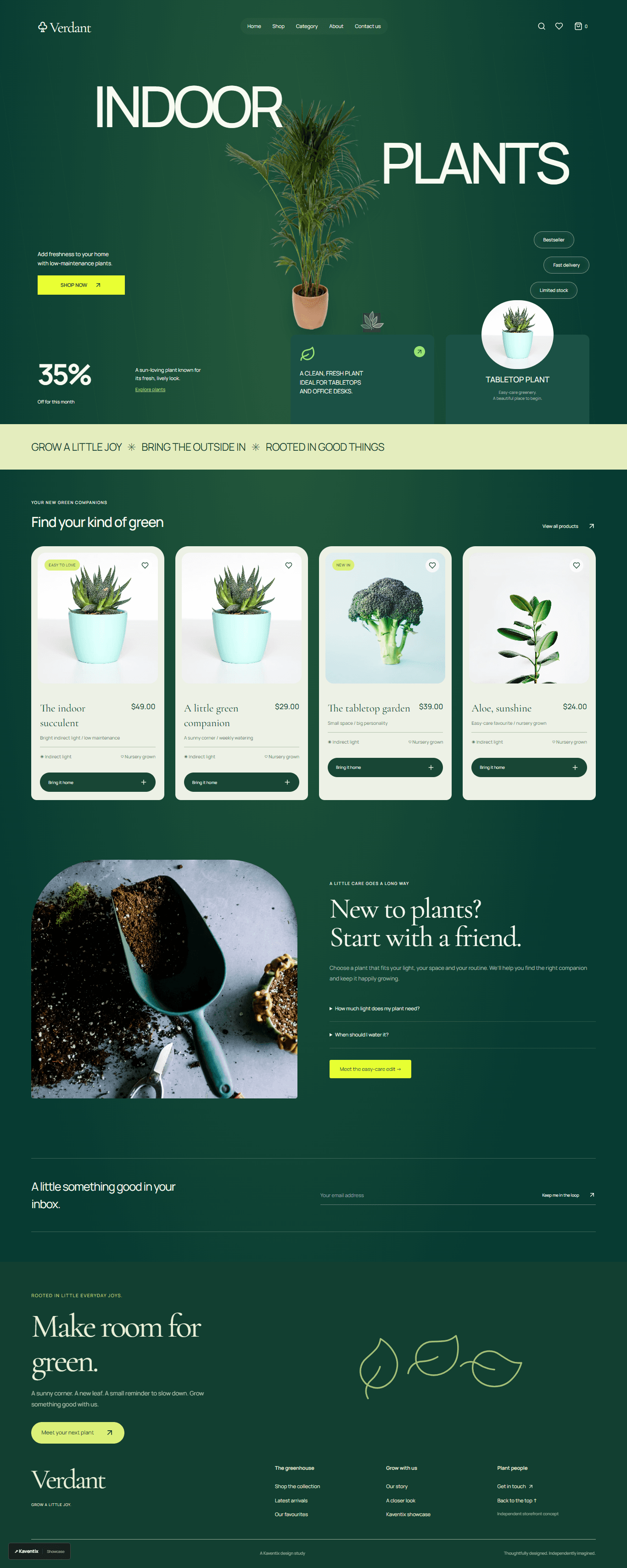
02Verdant / home 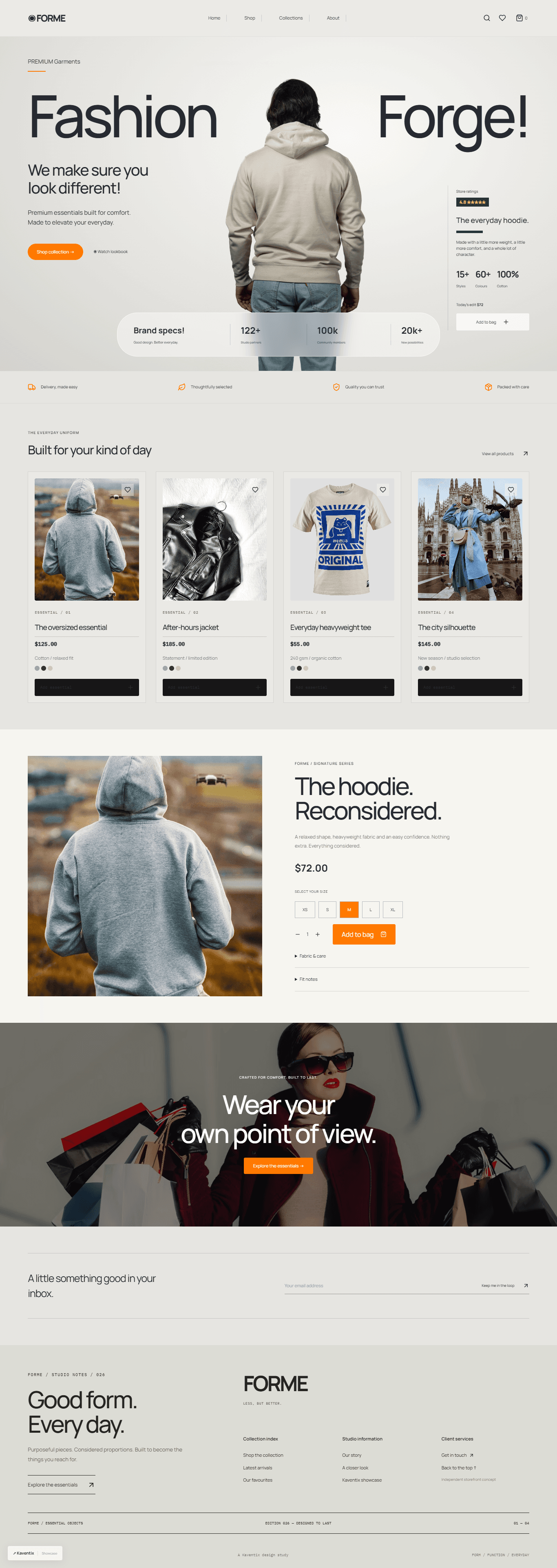
03Forge / essentials 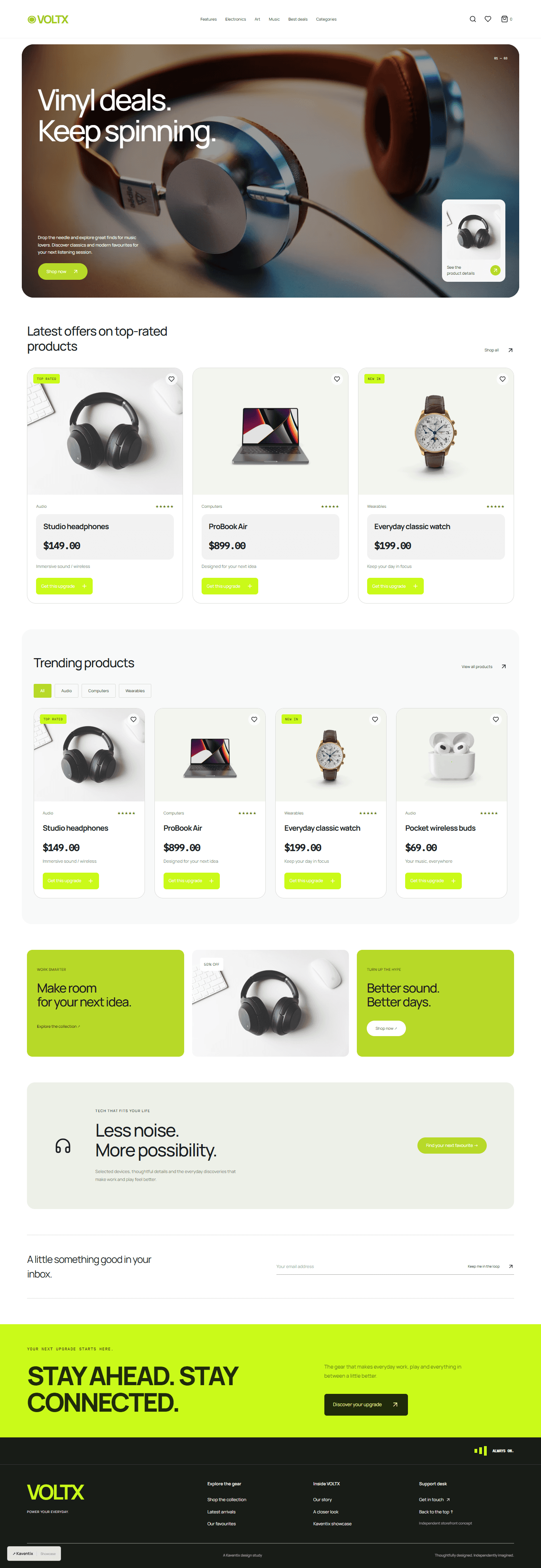
04Volt / technology 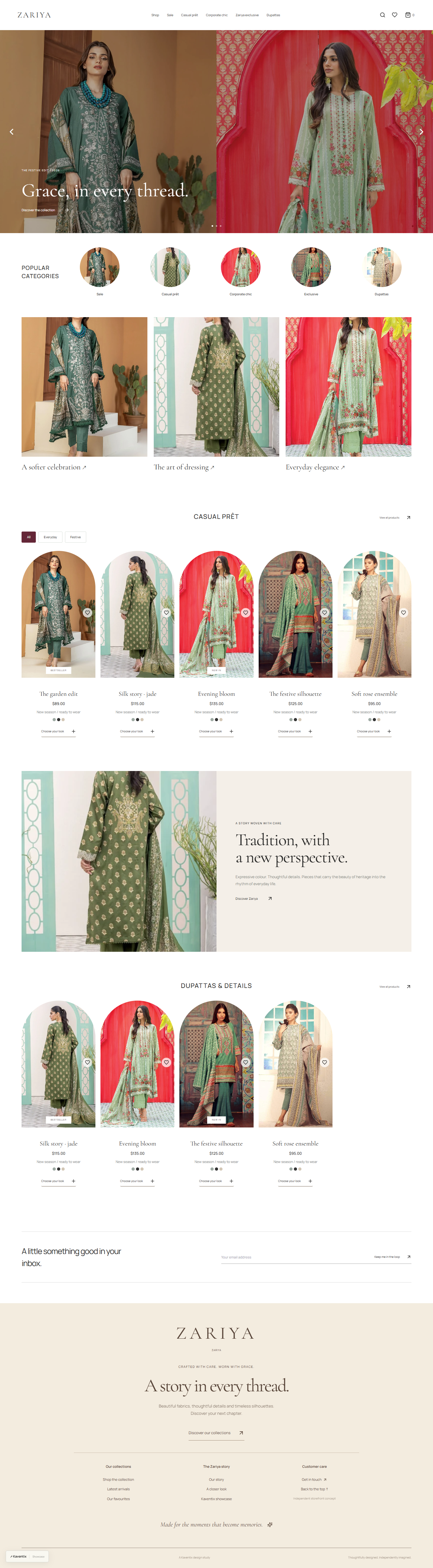
05Zariya / collections
We recommend a platform after seeing your catalog.
A shop with ten products and a wholesale business with thousands need different things. We work across the platforms below, plus the payment, search and marketing tools around them.
Commerce platforms
 Shopify
 WooCommerce
 Magento
 BigCommerce
 WordPress
 Next.js
 Node.js
Payments, search & growth
 Stripe
 PayPal
 Klarna
 Algolia
 Google Analytics
 Meta
 Mailchimp
- Klaviyo
The path from product page to paid order.
Four stages, from how your orders move today to test orders before launch.
Map your operations
How products are organized, how orders are packed and shipped, and which systems need to stay in sync.
Choose the platform
We compare Shopify, WooCommerce and a custom build against your catalog and budget, then recommend one.
Build the store
Catalog, cart, customer accounts and checkout, built as far as the chosen platform allows.
Test real scenarios
We place test orders and run through fulfillment and admin tasks the way your team will, before handover.
Questions about ecommerce development.
If your question isn’t here, send it over. Most answers depend on what you sell and how you run the business.
- Which ecommerce platform should we choose?
- It depends on what you sell and how you run the business, so we look at your catalog, payment requirements, integrations, budget and the way your team works first. The answer might be Shopify, WooCommerce or a custom application.
- Can you connect inventory or order systems?
- Yes, as long as your systems offer a suitable API or data export. Before building anything, we confirm who owns the data, how and when it syncs, which system wins when records disagree and where the integration's limits are.
- Can you improve our current checkout?
- Yes, within what your platform allows. We review the purchase flow and make the changes your platform supports, and we factor in any payment provider or platform restrictions from the start.

Tell us what
you're working on.
A few lines about your business and what you have in mind is enough. We'll read it properly and reply with questions and next steps.